Free in-home measure and quote - PGT, CGI and CWS impact lines compared on your actual openings, style by style
Sliding glass doors
Impact garage doorsPGTCGI
 Before
 After
After Before
 After
After Before
 After
AfterCasement Windows in Tampa, FL | TruePane Windows & Doors
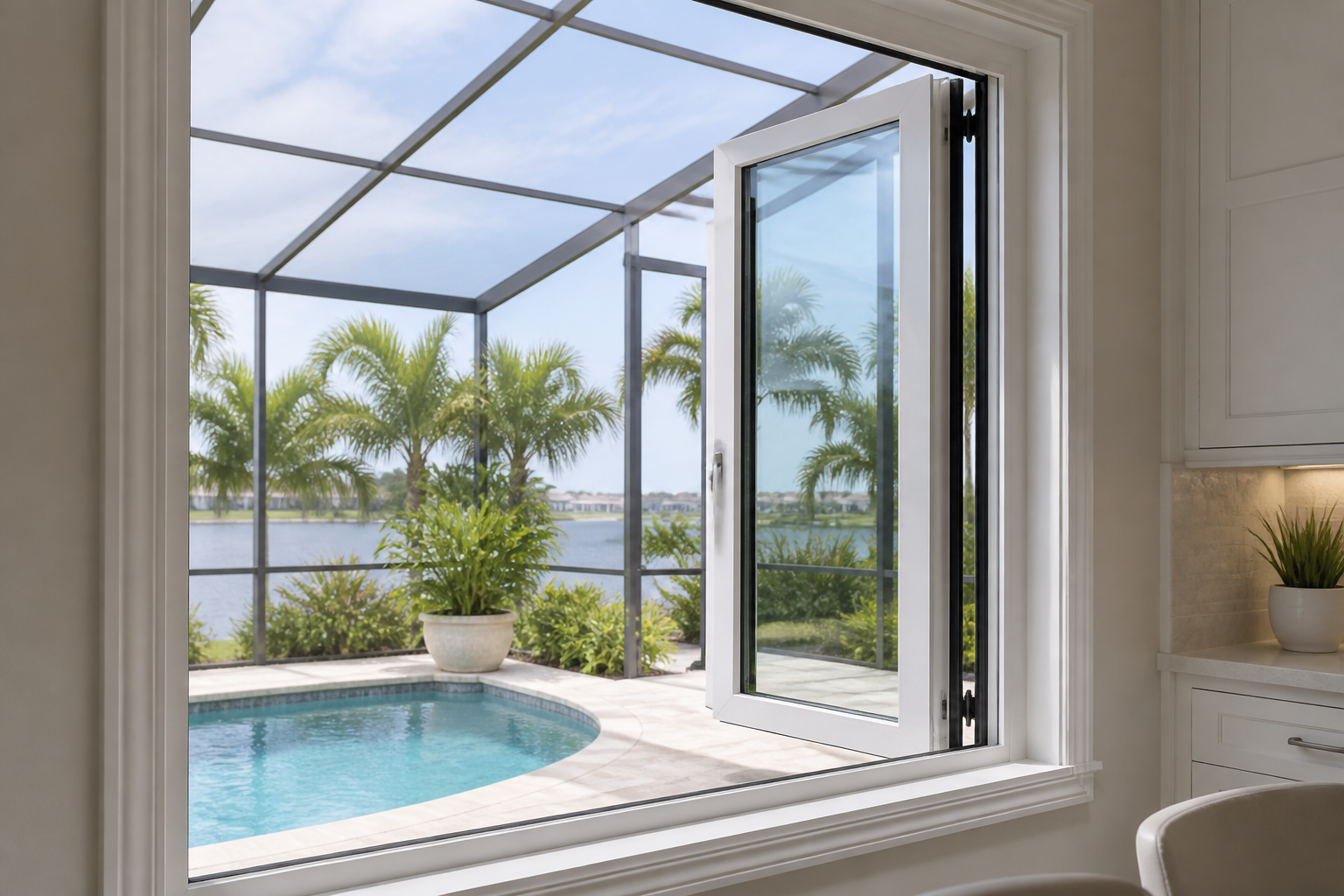
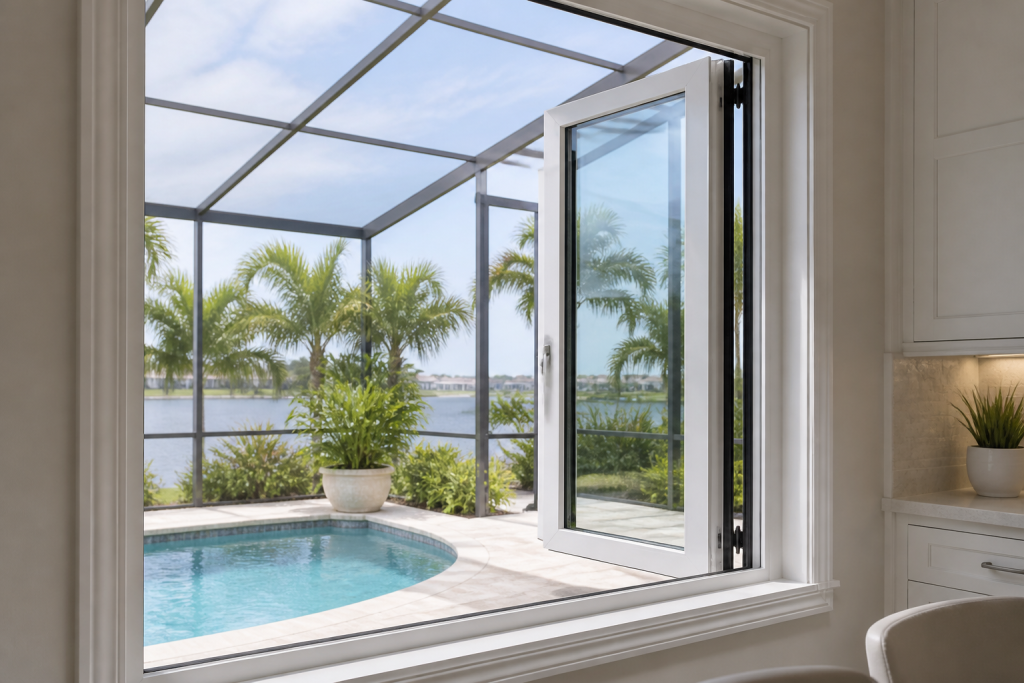
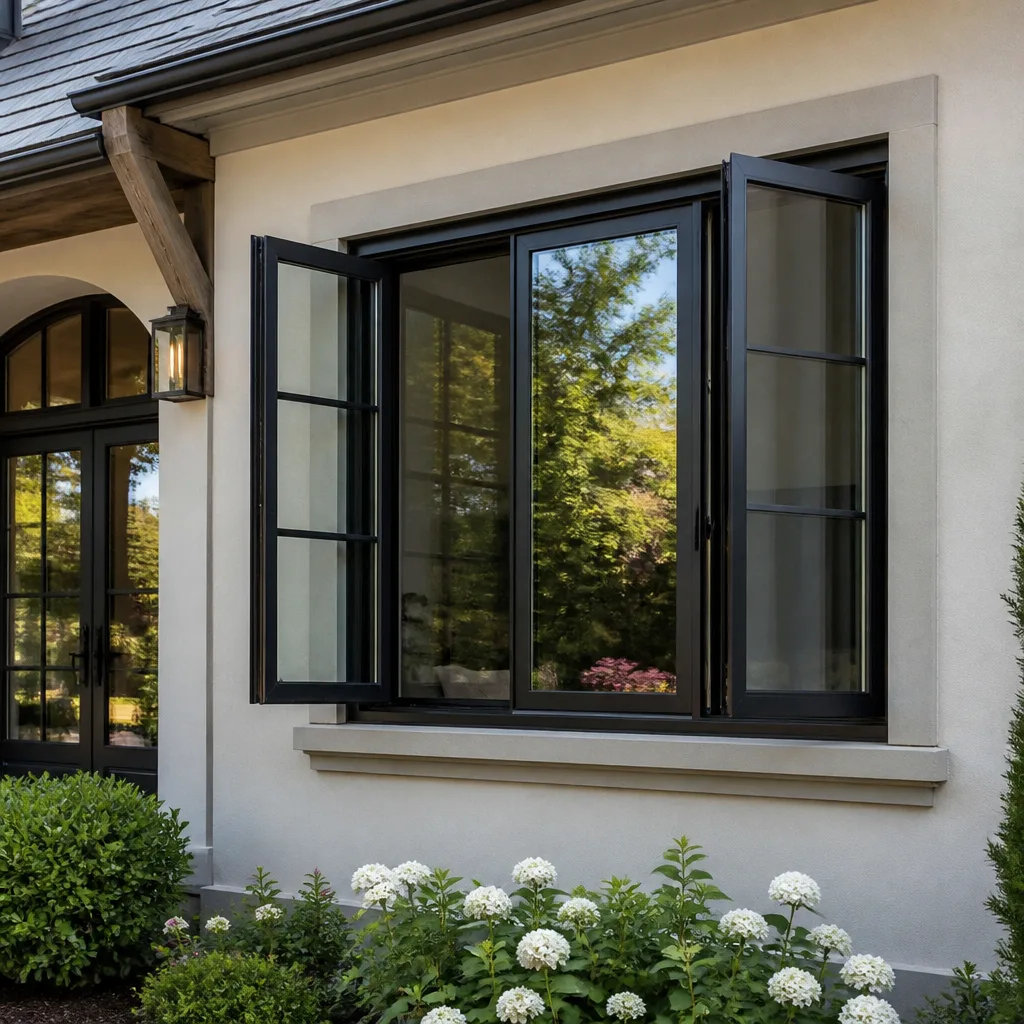
Casement windows hinge at the side and crank outward, which gives you a full opening for ventilation and a compression seal that closes tight against the frame. For Tampa homeowners, the impact-rated version of this window does two jobs at once: it moves air through the house on the breezy days we get nine months out of the year, and it stands up to the wind-driven debris we plan for every hurricane season. TruePane Windows & Doors installs impact casements across PGT, CGI, CWS, ES Windows, ECO, and Mr-Glass lines, so you’re not locked into one brand or one price point. We’ve been setting these windows in Tampa homes long enough to know which configurations hold up in which neighborhoods. Call (813) 320-9346 and we’ll walk you through your options.
Product Overview - Casement Windows
The casement profile exists in almost every window line we carry, and for good reason. Because the sash presses into the frame when you close the crank, it creates a full compression seal that fixed and hung windows can’t match. That seal is what makes the window tight in a rain event and quiet when the neighbor fires up a leaf blower. In Tampa’s climate, where afternoon storms roll through from June through September, a window that actually seals when it’s closed is not a luxury.
What makes the impact version of this window different from a standard casement is the laminated glass and the reinforced frame that holds it. The sash is side-hinged and crank-operated, so you get an unobstructed opening when it’s open. There’s no center rail cutting the view in half, which is one reason people pair casements with fixed picture windows. You get the clean sightline and the airflow, without giving up the impact rating.
Architecturally, casements fit Florida ranches, Mediterranean stucco homes, Key West style cottages, and mid-century block construction in Tampa neighborhoods like Palma Ceia, Seminole Heights, and South Tampa. The crank allows for outward ventilation even when a rain gutter or roofline would block a hung window from sliding. In rooms where you want to catch a cross breeze, a pair of casements on adjacent walls moves more air than a standard horizontal slider.
The frame material choices matter here. Aluminum casements in the impact configuration bring stiffness and thin sightlines, which fits modern and coastal designs. Vinyl casements offer thermal insulation and lower maintenance, which many Tampa homeowners prefer for street-facing elevations that bake in the afternoon sun. Both can be built to HVHZ requirements with the right glazing package. TruePane Windows & Doors orders each casement to the opening size and wind zone, never a stock unit pulled off a rack and “made to fit.”
Technical Specifications
| Specification | Options Available |
|---|---|
| Frame materials | Aluminum, Vinyl |
| Glass options | Laminated Impact Glass (PVB interlayer), Low-E Insulated Glass, Tinted Glass, Clear Glass |
| Color / finish options | White, Almond, Bronze, Black, Tan |
| Screen options | Fixed Screen, Retractable Screen |
| Operation | Side-hinged, crank-operated |
| Seal type | Full compression seal on all four sides when closed |
| Design pressure | Matched to your wind zone, up to +/-100, never higher |
| Compliance documentation | Miami-Dade NOA and Florida Product Approval numbers available per configuration |
Every casement we order for a Tampa project is spec’d to the opening, the wind zone, and the elevation exposure. We don’t upcharge for paperwork you don’t need, and we don’t skip documentation when your permit submittal demands it. Tell us the address and the window location, and we’ll quote the right configuration the first time.
Hurricane & Compliance Performance
Laminated Impact Glass - A PVB (polyvinyl butyral) interlayer is bonded between two panes of glass. When impact shatters the outer pane, the interlayer holds the glass in the frame instead of letting it blow through the opening. This is the core of what makes the casement a storm product, not just a window with a stronger hinge.
Miami-Dade NOA / Florida Product Approval - The specific casement configurations we order carry Miami-Dade NOA (Notice of Acceptance) and Florida Product Approval numbers. These numbers are issued per configuration, meaning the exact size, frame, glass package, and anchoring method you buy must match what the paperwork covers. We verify that on your quote, not after the windows arrive.
FBC / HVHZ Compliance - The casement window systems we install are engineered to Florida Building Code (FBC) High-Velocity Hurricane Zone (HVHZ) requirements. That’s the stricter code path that applies to most of the Tampa Bay coastal and near-coastal zones. A non-HVHZ window installed in an HVHZ jurisdiction fails inspection and can void the approval.
TAS 201 / TAS 202 / TAS 203 Testing Context - These are the protocol families HVHZ-rated products are tested under. TAS 201 covers large-missile impact, TAS 202 covers cyclic wind-pressure loading that simulates a hurricane’s repeated gusts, and TAS 203 covers forced-entry resistance. A window that carries the NOA number has been through this testing family, in the exact configuration you’re buying.
Design Pressure for Your Wind Zone - Design pressures are matched to your wind zone, up to +/-100, never higher. What that means in practice: we don’t sell a “+/-100” window to a homeowner in a zone that only needs +/-60, because a heavier window costs more without adding useful protection. We also don’t under-spec one. The DP rating on your quote will reflect the actual wind zone for the building’s location in Tampa.
Energy Performance - Low-E and insulated glass options are available on this product. Low-E coatings reduce heat transfer through the glass, which matters in Tampa where west-facing rooms get brutal afternoon sun. Insulated glass units add an air space that further slows heat gain. You don’t have to choose between a storm-rated window and an energy-conscious one; the two stack on the same casement.
Color & Glass Options
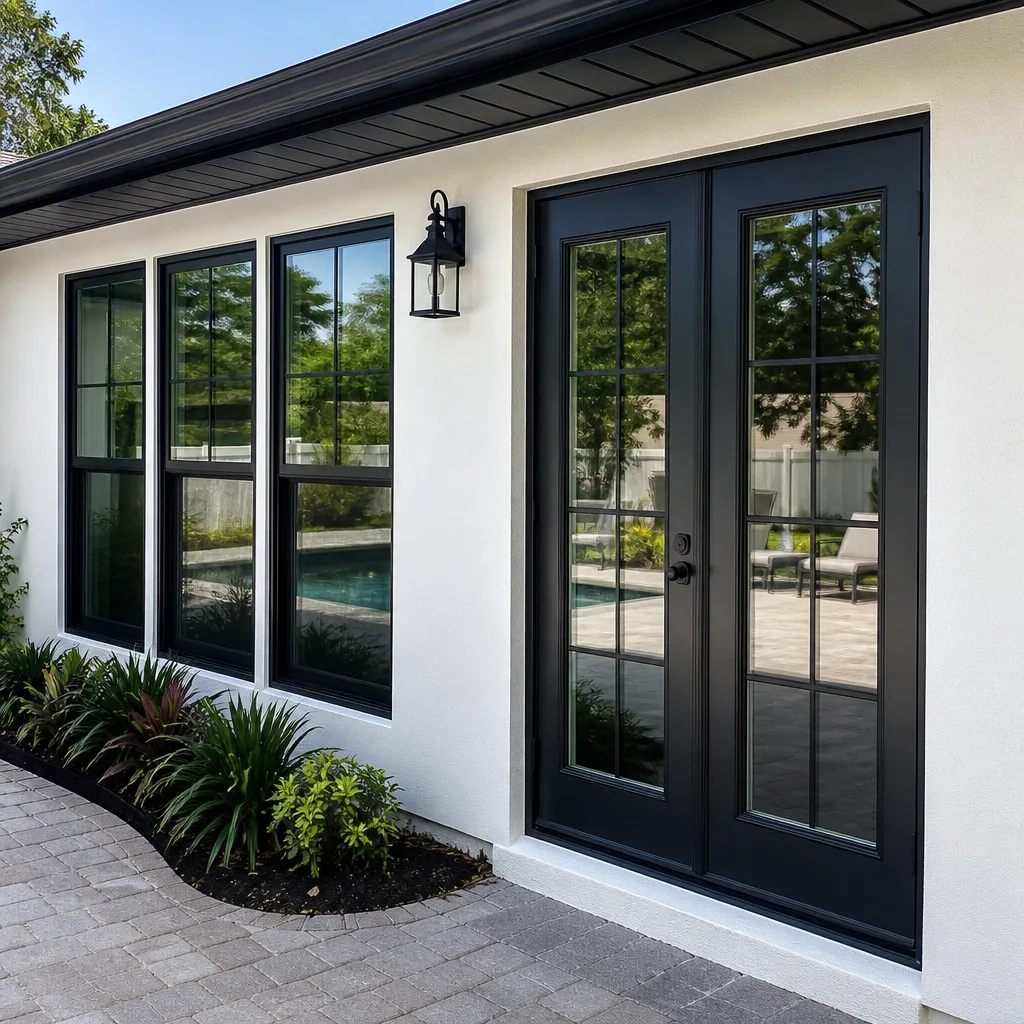
The finish on a window does more than match your trim. In Tampa, window color also affects how much heat the frame absorbs. White and Tan finishes are the most common choices for stucco and painted-block homes in neighborhoods like Carrollwood and Westchase. They stay cooler to the touch in direct sun and blend with typical Florida exterior paint palettes. Almond and Bronze suit Mediterranean and Tuscan elevations, especially with a barrel tile roof. Black finish frames have gained popularity on modern and transitional homes in South Tampa, where the contrast against white stucco reads as intentional. Every finish we offer is factory-applied, not a field-applied paint job.
Glass selection depends on what problem you’re solving. Laminated impact glass with a PVB interlayer is the hurricane code floor in most Tampa wind zones. Add Low-E to it and you get solar heat control plus storm protection. Tinted glass cuts glare and solar gain in east and west windows without changing the frame color. Clear laminated glass is the choice when you want maximum natural light and no color cast through the glass, which matters to people with ocean-view rooms or art on the walls. We’ll help you pick the glass package based on the room’s orientation and your code requirements, not a generic recommendation.
Installation by TruePane Windows & Doors in Tampa
The best casement window in the world will leak and fail if it’s set wrong. That’s not an exaggeration. An impact-rated window’s NOA approval assumes a specific anchoring pattern and perimeter seal. Skip the right anchor spacing, shim the frame out of square, or use the wrong sealant, and the window you paid for no longer performs like the window on the test report. This is why we install to AAMA 2400/2410 practice, which is the standard for installing windows in the field, and AAMA 812, which governs the low-expansion polyurethane foam air-seal around the perimeter of the opening.
Our process starts before the glass ever lands on the job site. We inspect the rough opening for rot, settling, out-of-square framing, and anchor substrate condition. On Tampa block homes and older wood-frame homes alike, the rough opening tells us what we’re working with. Then the frame goes in level, plumb, and square. That’s not marketing language. Those three words decide whether a casement crank operates smoothly for twenty years or binds in month three. We shim, anchor, and fasten to the NOA’s approved pattern for your configuration. We air-seal the perimeter with AAMA 812 low-expansion foam and flash the opening to shed water away from the building envelope. Then we test with water at the window after installation, clean the job site, and walk you through operation and cleaning before we leave.
For Tampa specifically, we think about coastal exposure the way the code does. A casement on a west-facing wall in Beach Park or Davis Islands carries different wind loading than one on an interior patio in Lutz or New Tampa. Some of our customers live in jurisdictions that require HVHZ documentation as part of the permit submittal. We know what those building departments ask for and we provide the NOA and FL Product Approval numbers that match your exact casement configuration. If your home is in an area where the permit office wants a wet or dry glazing detail, we’ve likely worked that exact submittal in your municipality before.
Frequently Asked Questions - Casement Windows
Design pressure is matched to your wind zone, up to +/-100, never higher. The right DP for your home depends on the building’s location in Tampa, the height of the window above grade, and the window’s position on the wall. We’ll calculate the required rating from your address and the opening’s location, not from a one-size-fits-all catalog. Call (813) 320-9346 and we’ll verify your wind zone before we quote.
Lead times run several weeks from order to delivery because impact casements are built to the opening size and glazing package you choose. If you’re working around a closing date, a rental turnover, or the start of hurricane season, call us early. We’ll give you a realistic production timeline on your quote and track your order through delivery. Reach us at (813) 320-9346.
If your home is in an HVHZ jurisdiction, yes, your permit package will likely require the NOA and FL Product Approval numbers for the exact window configurations you’re installing. We provide those documents per configuration, matching your specific frame, glass, size, and anchoring. We don’t hand you a generic spec sheet and hope the building department accepts it.
Yes. Casements are made to order, so we can match unusual rough openings, mulled combos with picture windows, and specific glass packages without forcing a stock size into your wall. The custom size still needs to fall within the tested range for the NOA number. If part of your opening falls outside the tested perimeter, we’ll tell you before you spend money, not after the window arrives.
Keep the track and hinges free of sand and salt buildup, which is a constant in Tampa’s coastal air. Rinse the frame and hinges with fresh water a few times a year, wipe down the weatherstripping, and operate the crank fully open and closed so the mechanism doesn’t stiffen. If the crank ever feels rough, address it early. Window maintenance is cheap; replacement hardware on a neglected casement is not.
Get a Quote - Casement Windows in Tampa
If you’re replacing windows in Tampa or building new, the casement line is worth a close look. We’ll measure your openings, confirm your wind zone, and walk you through the glass and frame options that fit your home and the code. Call TruePane Windows & Doors at (813) 320-9346 to schedule your free on-site measurement and get a written, line-item quote.
Written by the team at TruePane Windows & Doors, serving Tampa, FL with hurricane-impact windows and doors.
Six Reasons Homeowners Choose TruePane Windows & Doors
Impact systems engineered to design pressures up to +/-100, matched to your wind zone - your openings hold when the storm arrives.
Low-E insulated impact glass from our manufacturer lines commonly cuts monthly cooling bills 20-30%.
Laminated impact glass shuts out up to 40% of outside noise - traffic, neighbors, weather.
Monitoring services run $30-90 a month. Laminated impact glass resists forced entry around the clock, with no subscription.
Florida homeowners average around 25% savings on the windstorm portion of their policy after protecting every opening - some homes qualify for more.
A full impact package upgrades curb appeal, buyer confidence and appraised value in one project.
Other TruePane Windows & Doors Services
What Neighbors Say About TruePane Windows & Doors
Detailed Images